Nepali festivals
Tihar explained: lights, family, and Bhai Tika
Tihar is a multi-day Nepali festival often recognized for lamps, rangoli, music, gatherings, and Bhai Tika. It is sometimes compared with Diwali, but Tihar has its own Nepali rituals, sequence of days, and family traditions.
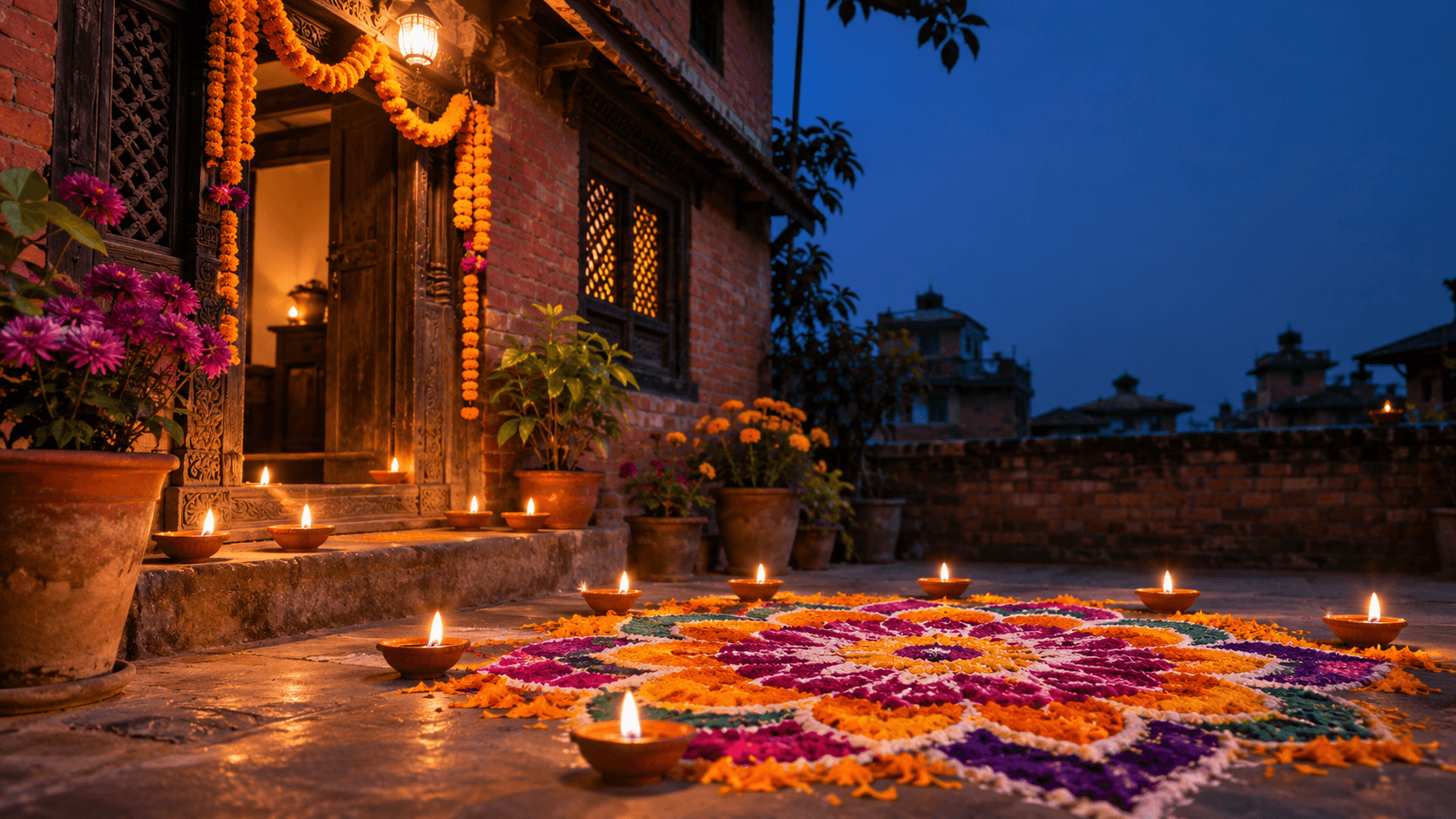
- Often known for
- Lights, rangoli, deusi-bhailo, and family gatherings
- A key observance
- Bhai Tika, a sibling-focused blessing day
- Dates
- Change yearly with the lunar Nepali calendar
What is Tihar?
Tihar lasts several days and includes rituals honoring animals, prosperity, home, and relationships. Lamps and colorful rangoli brighten homes and courtyards, while groups may visit neighbors with deusi-bhailo songs.
The order and emphasis of each day can differ by community and family. That variety is part of the festival, not a mistake in how someone observes it.
What is Bhai Tika?
Bhai Tika is a day when sisters and brothers, or people who hold that relationship, exchange blessings and gifts. A multicolored tika is a familiar symbol of the day, but the way families gather and mark it is personal.
For diaspora families, the gathering may happen on a nearby weekend when travel, school, and work make the exact day difficult. That adjustment is common and does not make the celebration less meaningful.
Joining respectfully
If you are invited, ask whether there is a dress expectation and whether you should bring sweets, fruit, or a small gift. Let your host guide you through any ritual moments. The simplest contribution is to arrive with care and curiosity.
Quick answers
Is Tihar the same as Diwali?
They overlap in calendar season and share some themes, but Tihar has distinct Nepali traditions and a particular sequence of observances. It is better to use the name your host or community uses.
What is deusi-bhailo?
Deusi-bhailo refers to festive group singing and visiting during Tihar. The songs, style, and local customs vary.
Keep exploring
Find the people carrying culture forward.
JureliHub connects cultural context with Nepali creators and diaspora communities.
Explore creator hubs