Nepali food
Momo explained: Nepal’s beloved dumplings
Momo are dumplings that are especially popular in Nepal and across the Himalayan region. They are commonly filled with vegetables, chicken, buffalo, pork, or other ingredients, then steamed and served with a bold achar-style dipping sauce.
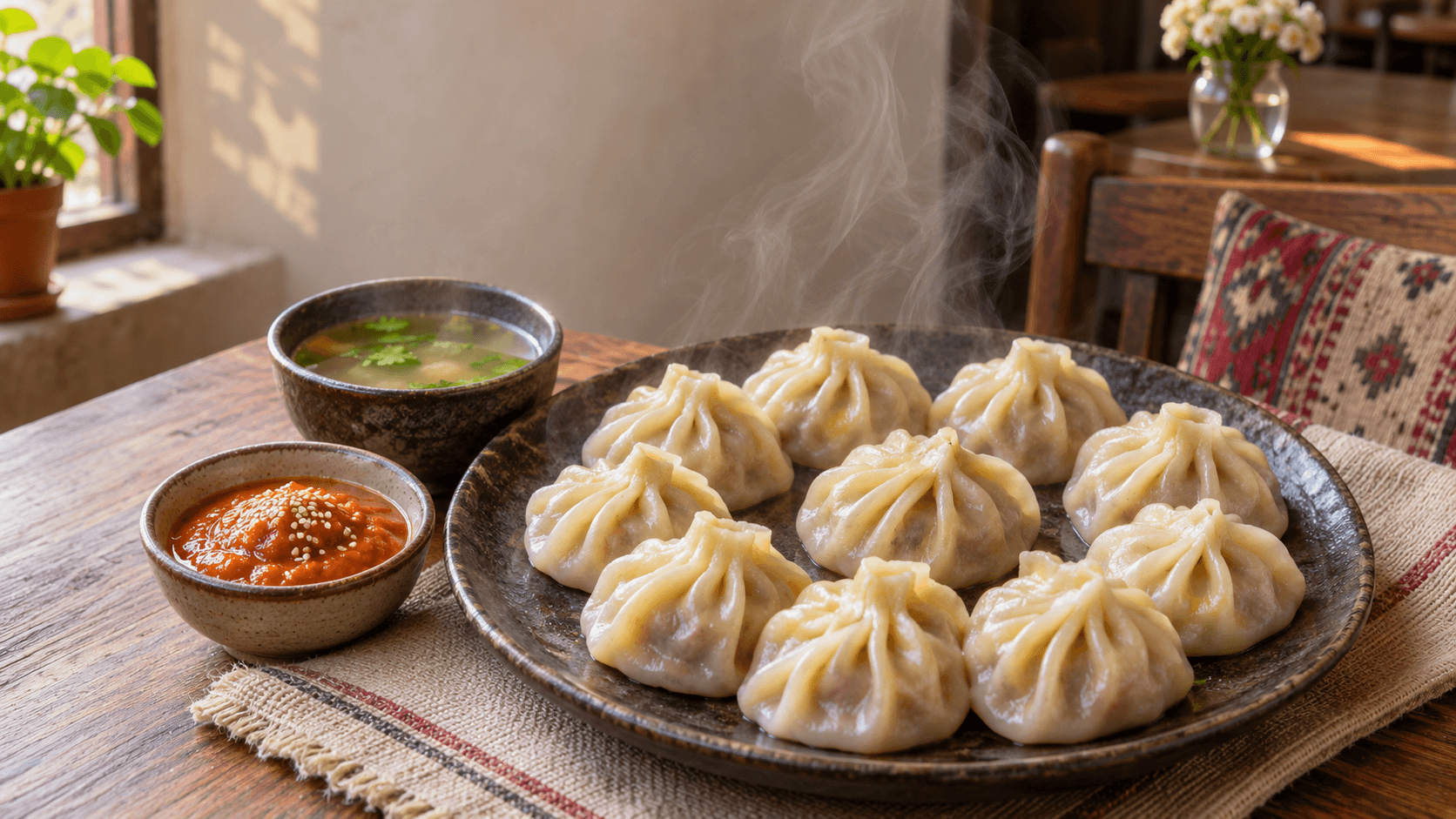
- Usually cooked
- Steamed, though fried and jhol versions are common
- Common fillings
- Vegetable, chicken, buffalo, pork, and paneer
- The signature
- A spicy, often tomato or sesame-based dipping sauce
What makes Nepali momo distinct?
Momo share a family resemblance with dumplings found across Asia, but Nepali versions have developed their own everyday culture, fillings, folds, and sauces. The achar is often just as important as the dumpling itself.
You may see round or crescent-shaped momo, open-topped momo, fried momo, and jhol momo served in a seasoned broth. A good momo plate is usually communal food: quick to share, easy to order, and highly debated among friends.
How to order
Choose a filling first, then ask whether the momo are steamed, fried, or served as jhol momo. If you do not eat a particular meat, ask directly: buffalo momo is common and should not be assumed to be beef.
The sauce can be spicy. Taste it before coating every dumpling, especially if the restaurant offers a red chili achar.
Beyond the snack
Momo are street food, café food, party food, and comfort food. They are also a useful entry point into the wider Nepali food scene, where regional ingredients and family recipes matter more than a single standardized menu.
Quick answers
Are momo always spicy?
The dumpling itself is not always spicy, but the dipping sauce often is. Ask for sauce on the side if you are unsure.
What are jhol momo?
Jhol momo are dumplings served in a flavorful, often sesame- and tomato-based soup or sauce. The exact preparation varies by restaurant and household.
Keep exploring
Find the people carrying culture forward.
JureliHub connects cultural context with Nepali creators and diaspora communities.
Explore creator hubs